Why Peace Requires Effort while Chaos Doesn't?
Learn Why Peace Requires Effort While Chaos Doesn’t and discover practical habits that help you build a calmer and more meaningful life.

Have you ever wondered Why Peace Requires Effort While Chaos Doesn’t? It sounds strange at first because most of us assume peace should come naturally. Yet if you look around, you will notice something different. A messy room happens without trying. A healthy relationship needs attention. A distracted mind appears on its own, while a focused one takes practice.
That is exactly Why Peace Requires Effort While Chaos Doesn’t. Chaos grows when we stop paying attention. Peace grows when we choose our thoughts, habits, and actions with intention. Whether it is your studies, friendships, health, or career, every meaningful part of life asks for consistent effort. This article explains why that happens and how you can train your mind to choose peace without feeling overwhelmed.
Table of Contents
- What Does Peace Really Mean
- Why Chaos Feels Natural
- Why Peace Requires Effort While Chaos Doesn’t
- The Science Behind Peaceful Habits
- Social Media and Modern Distraction
- Small Daily Choices Shape Your Mind
- Common Mistakes That Create Chaos
- Practical Ways to Build Peace Every Day
- A Real Life Example
- Key Lessons
- Frequently Asked Questions
What Does Peace Really Mean
Many people think peace means having no problems. That idea is unrealistic. Life will always include uncertainty, setbacks, and emotional moments.
Real peace is the ability to stay steady even when life becomes difficult.
This is one reason Why Peace Requires Effort While Chaos Doesn’t. Peace is not about escaping challenges. It is about learning how to respond instead of reacting.
Imagine two students preparing for the same exam. One spends weeks following a study routine. The other keeps delaying work until the night before. Both face the same exam, but only one experiences peace because preparation created confidence.
Peace is built long before stressful moments arrive.
Why Chaos Feels Natural
Have you noticed how quickly your room becomes messy after cleaning it?
The same thing happens inside your mind.
Negative thinking appears faster than positive thinking because the brain naturally pays more attention to threats. Psychologists call this the negativity bias. Thousands of years ago, this helped humans survive. Today it often creates unnecessary stress.
That explains Why Peace Requires Effort While Chaos Doesn’t. Your brain automatically notices problems, distractions, and fears. It does not automatically create discipline, patience, or gratitude.
Without conscious effort, chaos slowly becomes your default setting.
Why Peace Requires Effort While Chaos Doesn't
The simplest answer is this.
Chaos grows by neglect.
Peace grows by intention.
Think about different areas of life.
A garden fills with weeds if nobody cares for it.
Your body becomes unhealthy without movement.
Friendships fade without communication.
Your finances become stressful without planning.
Every valuable part of life needs attention.
This pattern clearly shows Why Peace Requires Effort While Chaos Doesn’t. Building something meaningful always requires consistency. Breaking something usually happens on its own.
The same rule applies to your mindset.
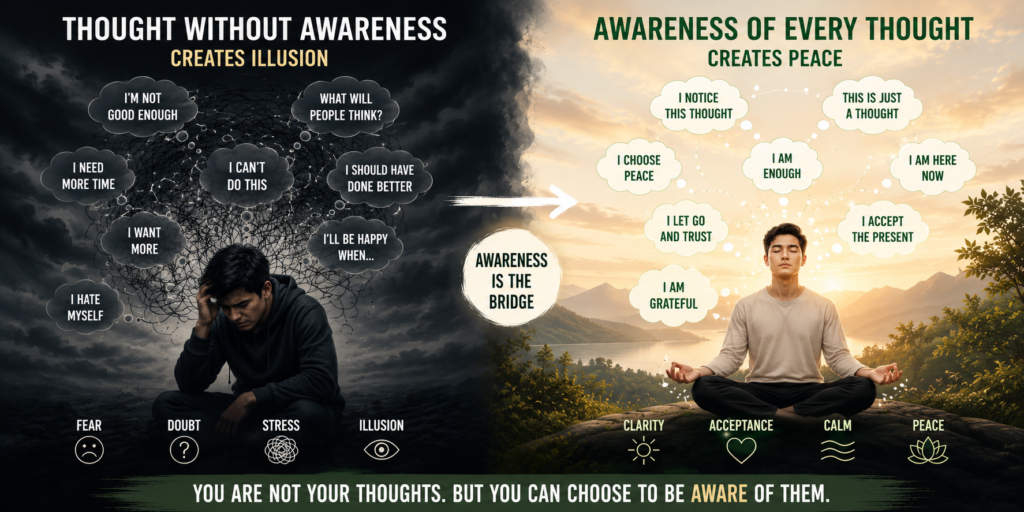
When you ignore your thoughts, stress quietly takes over. When you practice gratitude, mindfulness, and self awareness, your inner world becomes stronger.
The Science Behind Peaceful Habits
Your brain constantly changes based on repeated actions. This ability is called neuroplasticity.
Every repeated habit strengthens certain mental pathways.
If your daily routine includes endless scrolling, comparison, and procrastination, your brain becomes more comfortable with distraction.
If your routine includes reading, reflection, exercise, and quality sleep, your brain slowly becomes calmer and more focused.
This scientific understanding helps explain Why Peace Requires Effort While Chaos Doesn’t.
Peace is not luck.
Peace is trained.
Small daily actions may seem insignificant, but over time they shape your personality.
That is why successful people often focus more on routines than motivation.
Social Media Makes Chaos Easy
Gen Z has access to more information than any previous generation.
Unfortunately, more information does not always create more wisdom.
Every notification competes for your attention.
Every short video encourages instant gratification.
Every comparison creates pressure to keep up.
None of these require effort.
That is another example of Why Peace Requires Effort While Chaos Doesn’t.
Peace often means putting your phone away, choosing meaningful conversations, reading a book, spending time in nature, or simply sitting quietly for a few minutes.
These choices may seem boring at first, but they train your mind to become less dependent on constant stimulation.
People who protect their attention usually protect their peace as well.
Small Daily Choices Shape Your Mind
Your mindset is not built in one big moment. It is built through hundreds of small decisions that seem unimportant at the time.
Choosing to wake up on time.
Choosing to finish one task before opening social media.
Choosing to listen instead of reacting during an argument.
Choosing to spend ten minutes reading instead of scrolling.
These choices slowly shape your character. This is another reason Why Peace Requires Effort While Chaos Doesn’t. Every peaceful habit asks for intention, while most chaotic habits happen automatically.
The good news is that you do not need to change your entire life overnight. One positive habit repeated every day creates lasting results.
Common Mistakes That Create Chaos
Many people unknowingly invite chaos into their lives through everyday behaviors.
They avoid difficult conversations until problems become bigger.
They compare themselves with people they see online.
They expect motivation before taking action.
They ignore sleep, exercise, and healthy routines.
They keep saying yes to everything even when they need rest.
These patterns may feel normal, but they slowly increase stress and reduce emotional stability.
This is exactly Why Peace Requires Effort While Chaos Doesn’t. Peace requires awareness. Chaos grows when we live on autopilot.
Practical Ways to Build Peace Every Day
You do not need expensive courses or perfect circumstances to become more peaceful.
Start with simple habits.
Spend five minutes in silence every morning.
Write down three things you are grateful for.
Exercise regularly, even if it is only a short walk.
Keep your study or work space clean.
Limit unnecessary screen time.
Practice deep breathing before responding when you feel angry.
Protect your sleep schedule.
These habits may look ordinary, yet they create extraordinary long term results.
That is Why Peace Requires Effort While Chaos Doesn’t. Small actions repeated consistently become your lifestyle.
A Real Life Example
Imagine two friends who begin college together.
The first student studies a little every day, sleeps on time, exercises, and keeps a simple daily routine.
The second student postpones assignments, stays awake late every night, spends hours scrolling through social media, and depends on last minute effort.
After one semester, both students have the same opportunities, but completely different experiences.
The first student feels calmer and more confident.
The second student feels anxious and overwhelmed.
This example shows Why Peace Requires Effort While Chaos Doesn’t. The difference was not talent. It was daily choices.
Industry Insight
Psychologists often explain that our environment shapes our behavior more than motivation does.
If your room is clean, your phone is not constantly within reach, and your daily routine supports healthy habits, making peaceful decisions becomes much easier.
People who achieve long term emotional balance rarely rely on willpower alone.
Instead, they build systems that support better choices.
This practical understanding reinforces Why Peace Requires Effort While Chaos Doesn’t. Peace becomes easier when your environment supports it
Actionable Takeaways
If you want more peace in your life, remember these simple lessons.
Peace begins with small habits.
Discipline creates freedom.
Attention is your most valuable resource.
Consistency matters more than perfection.
Your environment influences your mindset.
Every peaceful choice today makes tomorrow a little easier.
These ideas explain Why Peace Requires Effort While Chaos Doesn’t in everyday life.